Instance-level re-identification

Re-identification asks whether two images show the same individual, not just the same class. I curated the Grevy's Zebra Census Dataset and helped develop multiview spatio-temporal track clustering for re-identification.

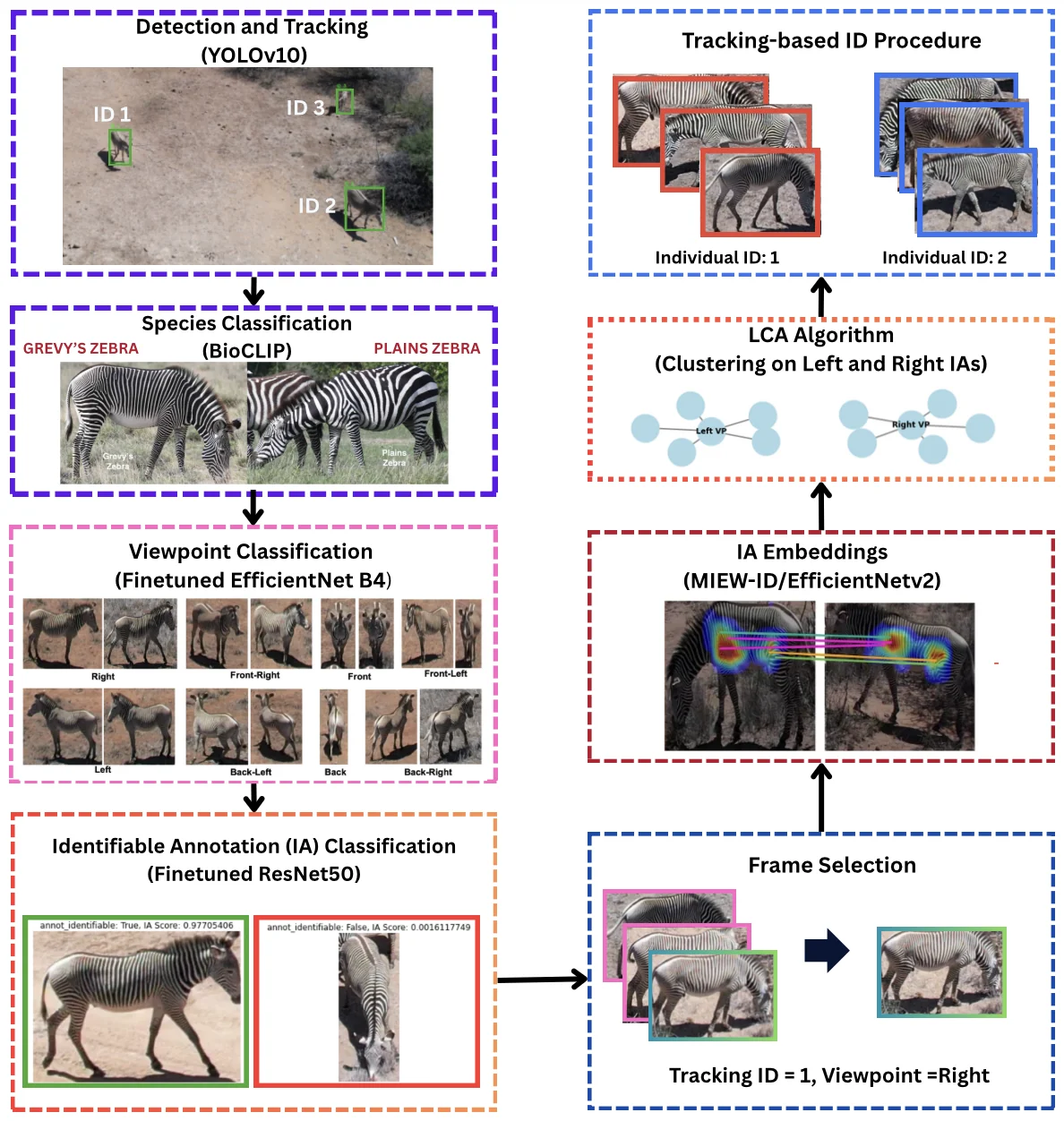
Pipeline: YOLOv10 detection and tracking, BioCLIP species classification, viewpoint and identifiability classification, frame selection, MiewID embeddings, LCA clustering of left and right views, and track-based linking.
CVPR 2025 Workshop

Animal Re-Identification via Multiview Spatio-Temporal Track Clustering

Ankit K. Upadhyay, Ekaterina Nepovinnykh, S M Rayeed, Aidan Westphal, Lawrence Miao, Julian Bain, Jaeseok Kang, Tuomas Eerola, Heikki Kälviäinen, Charles V. Stewart
CVPR 2025 Workshop on CV4Animals

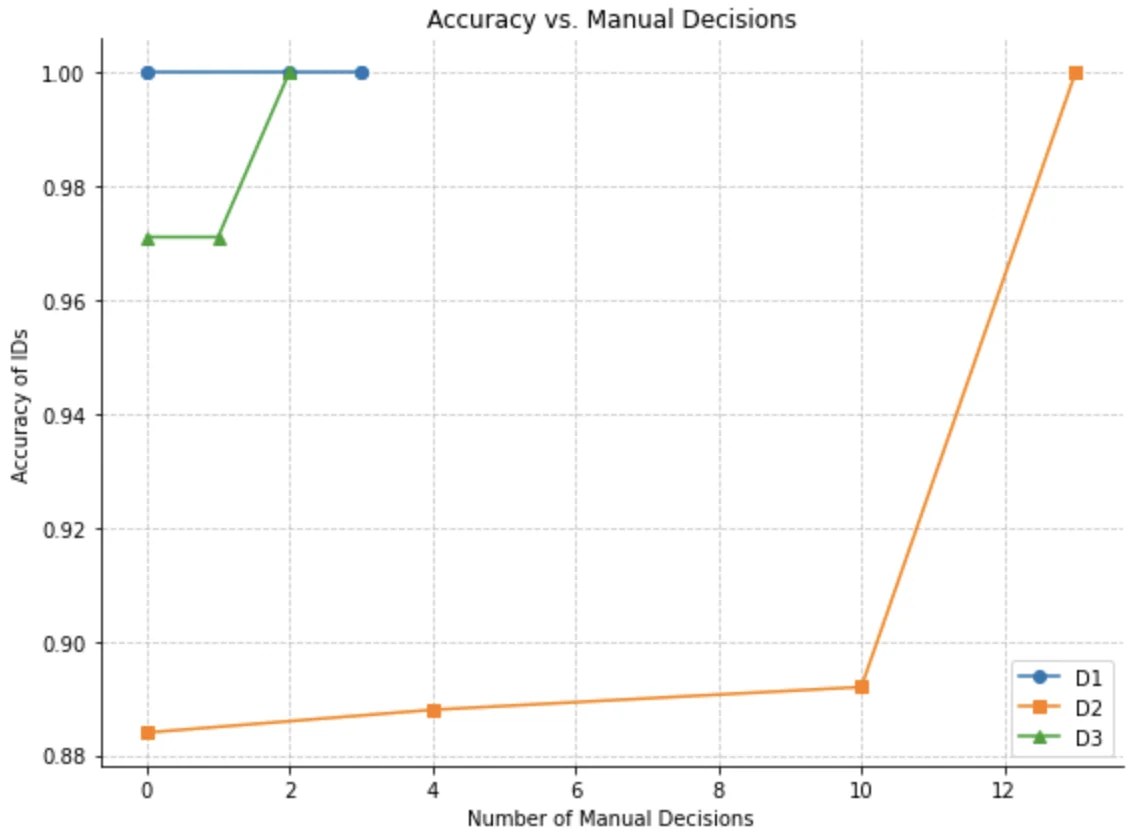
Individual animal identification from long drone videos. Animals are detected and tracked with YOLOv10, classified by species with BioCLIP and by viewpoint, rated for how identifiable each detection is, and sampled from both sides. MiewID embeddings are clustered and clusters from the same track are linked across viewpoints, reaching near-perfect identification on Grevy's zebra videos from KABR with very few manual decisions.
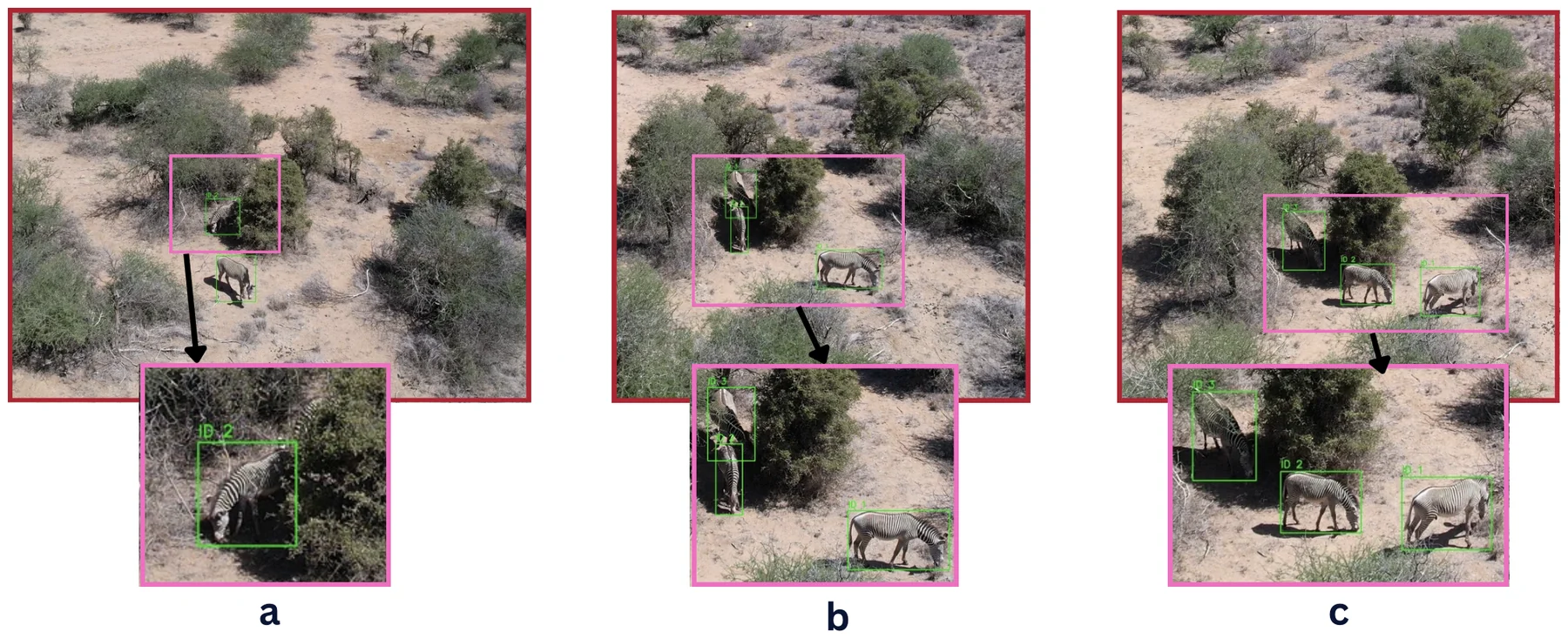
Tracking Grevy's zebras through drone video frames; each inset follows the same tracked individuals.
Identification accuracy against the number of manual decisions on the three drone-video sets.
Dataset

GZCD: Grevy's Zebra Census Dataset

Hugging Face, Imageomics, CC BY 4.0

Census imagery of endangered Grevy's zebras for individual re-identification, detection and classification, with initial and final identity metadata. Grevy's zebras are endangered, and stripe-based identification lets a census count individuals without tagging them.

Other research areas